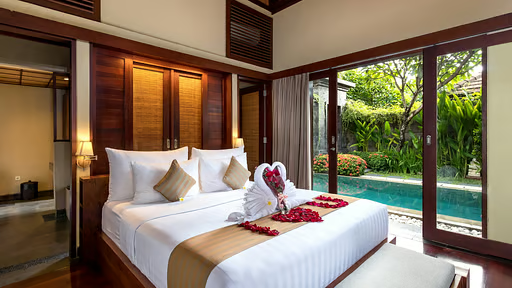
Best Honeymoon Suite Services: Evaluation & Operational Blueprint
High-tier hospitality evaluation requires analyzing operational staff ratios, service delivery channels, privacy management protocols, and guest communication workflows. Marketing campaigns frequently highlight superficial welcome amenities, driving up nightly rates without providing structural improvements to service delivery or staff training standards. Securing exceptional post-wedding accommodations demands systematic analysis of butler integration models, house-call response times, culinary timing precision, and housekeeping discretion protocols.
Modern luxury properties display significant operational variation across distinct geographic regions and hospitality frameworks. Dedicated private butler teams, specialized in-suite dining logistics, custom wellness programming, and automated digital concierge channels present distinct trade-offs that directly influence overall guest comfort. Assessing these service models requires evaluating staff response latency, physical delivery paths, guest boundary management, and background administrative support. Understanding these operational mechanisms enables travelers to separate real service value from decorative marketing promises.
This technical reference manual establishes an analytical framework for evaluating and selecting premium hospitality services. By examining service delivery architecture, operational support channels, financial expenditure structures, and pre-arrival verification steps, the following analysis provides actionable guidance for securing top-tier accommodation assets globally.
Understanding “Best Honeymoon Suite Services”
Evaluating best honeymoon suite services requires separating professional operational support from superficial gift items. Hospitality platforms frequently mark up standard suite rates by adding wine or welcome notes while ignoring poor staff communication, slow room service, and intrusive housekeeping schedules.
High-performing luxury hospitality services depend on tangible operational structures. Dedicated butler pantries, low staff turnover, specialized culinary channels, and clear privacy protocols form the foundation of premium guest support.
Decoupling Promotional Extras from Operational Support
Promotional packages often feature complimentary champagne or turndown flower arrangements. However, those gestures frequently mask slow maintenance responses, noisy housekeeping carts, or inexperienced front-desk staff.
Evaluating suite inventory effectively requires inspecting property staffing ratios, service channel architecture, and administrative management models. Confirming low staff-to-guest ratios, private service corridors, and experienced concierge teams helps ensure seamless care throughout your stay.
Operational Risks in Hospitality Service Naming
Selecting room categories based purely on advertised service lists introduces operational risks and unexpected physical inconveniences:
-
Dedicated butler services can become intrusive if staff lack proper boundary training and privacy awareness.
-
In-suite dining programs often suffer from temperature drops during transit across broad resort grounds.
-
On-demand spa services can create scheduling friction if external therapists must be dispatched from off-site agencies.
Visual Discretion and Boundary Management
Service discretion depends on architectural layout, staff training protocols, and delivery channels. Dual-door butler pantries, discrete service corridors, and pre-arranged servicing schedules protect guest privacy from unnecessary intrusions.
Historical Evolution of Specialty Hospitality Services
Luxury hospitality services underwent major operational changes over the past century. Early twentieth-century luxury grand hotels relied on centralized floor valets, formal dining room captains, and static concierge desks to serve wealthy guests.
The Transition to Dedicated Personal Butler Teams
During the late twentieth century, luxury resort management moved away from centralized room service departments toward assigned personal butler teams. Properties prioritized individual guest communication, private check-in procedures, and custom itinerary planning.
While dedicated butler service improves personal attention, it expands operational complexity. Hotel management must maintain rigorous training standards to ensure staff provide attentive care without violating guest privacy.
Fully Integrated In-Suite Dining and Wellness Services
Contemporary high-tier suites increasingly incorporate full restaurant and spa capabilities directly into individual room operations. Modern properties offer private chef dining experiences, custom sommelier wine pairings, and in-suite hydrotherapy setups.
This operational evolution transforms guest rooms into fully functional private dining and wellness environments. Couples enjoy fine dining and professional spa treatments without entering shared public hotel spaces.
Conceptual Frameworks for Service Evaluation
Evaluating top-tier suite services requires structured analytical tools. Systematic frameworks help separate operational performance from subjective review scores.
The Service Autonomy Matrix
This model measures how effectively hospitality services enable guests to relax without needing frequent interactions with hotel staff or outside vendors. The model evaluates three core operational components:
High service autonomy guarantees undisturbed quiet, transforming accommodation quarters into an independent sanctuary.
The Response Latency and Privacy Index
Staff efficiency directly influences overall room comfort. This framework evaluates staff response times alongside boundary management to identify optimal service operations across luxury properties.
Key Service Delivery Typologies and Strategic Trade-Offs
The luxury hospitality market features distinct service structures across diverse geographic regions. Each service style presents specific operational benefits, physical limits, and spatial trade-offs.
Dedicated Personal Butler Service
Assigned to specific high-tier suites, personal footmen handle unpacking, dining reservations, laundry care, and activity scheduling.
These professionals provide continuous personal care and rapid request fulfillment. However, maintaining continuous coverage requires clear communication regarding preferred service hours and privacy boundaries.
On-Demand Digital Concierge Messaging
Operating through encrypted mobile applications or tablet systems, digital concierge platforms allow guests to order services, request items, and confirm itineraries silently.
This model provides clear record tracking and eliminates unnecessary phone calls. Trade-offs include reliance on technical systems and potential delays during peak system load hours.
Private Chef and Culinary Preparation Teams
Dispatched directly to suites equipped with kitchen pantries, private culinary teams prepare customized multi-course meals directly within the guest suite.
Guests enjoy exclusive dining experiences and customized wine pairings in complete privacy. Trade-offs include temporary kitchen noise, food aroma dispersion, and required setup windows before meal times.
Discrete Housekeeping Teams
Coordinated through central guest management systems, discrete housekeeping units clean rooms during specific windows when guests leave the suite for activities.
This operational model prevents awkward door encounters and keeps rooms spotless. Trade-offs require guests to maintain fixed activity schedules to allow adequate cleaning windows.
Detailed Real-World Scenario Assessments

Selecting accommodations involves balancing operational limitations against personal travel preferences. Real-world scenarios highlight practical decisions travelers face when evaluating service models.
Scenario A: Dedicated Butler Care vs. Personal Privacy
A couple compares a high-category suite with full-time butler care against an independent villa with on-request front desk service.
-
Primary Constraint: The dedicated butler team checks in frequently throughout the day to offer refreshments and updates.
-
Strategic Decision: Choose the butler suite while setting clear daily privacy windows where staff do not enter.
-
Secondary Impact: Setting fixed privacy windows requires planning daily activities to align with service schedules.
Scenario B: Private In-Suite Dining vs. Main Restaurant Dining
A couple compares ordering a four-course private chef dinner inside their suite against dining at the resort’s primary fine-dining venue.
-
Primary Constraint: Preparing food inside the suite kitchen pantry creates localized cooking noise and service activity for two hours.
-
Strategic Decision: Select the private chef dinner to enjoy customized culinary prep without leaving the room.
-
Secondary Impact: Service staff must access the suite post-meal to clear equipment and clean cooking surfaces.
Planning, Cost, and Resource Dynamics
Procuring premium hospitality services requires looking beyond baseline room rates to evaluate total financial commitments. Published nightly prices rarely reflect the complete cost of specialized service programs.
Financial Dynamics and Service Surcharges
Nightly rates fluctuate based on seasonal occupancy cycles, local labor markets, and holiday demand patterns. Beyond room charges, indirect service costs impact total travel budgets:
-
Mandatory Staff Service Fees: Daily gratuity surcharges distribution across back-of-house staff, housekeepers, and luggage handlers.
-
Private Chef Setup Premiums: Fixed labor fees applied when dispatching culinary staff for private suite dining.
-
In-Suite Spa Dispatch Fees: Specialized service markups added when mobile massage therapists perform treatments in guest quarters.
Verification Strategies and Audit Tools
Evaluating luxury accommodation services requires structured audit habits during pre-booking research. Direct verification steps confirm service claims before submitting non-refundable deposits.
Direct Property Verification Protocols
Before confirming a reservation, contact resort management directly to verify key operational details that digital booking engines omit:
-
Staff-to-Guest Ratio Audit: Inquire about dedicated property staffing levels to ensure sufficient service coverage during peak operating hours.
-
Service Access Architecture: Confirm whether target suites feature dual-door pantries or separate staff entries to minimize living room disruptions.
-
Cross-Department Coordination: Verify how requests pass between front-desk teams, kitchen staff, and housekeeping crews to prevent dropped communications.
-
Specialized Service Experience: Ask about butler team training certifications and language fluency to ensure effective communication throughout your stay.
Risk Landscape and Operational Failure Modes
Securing high-tier accommodation services introduces operational risks that can compromise stay quality. Identifying potential failure points early allows travelers to build effective safeguards.
Operational Service Misrepresentation
Marketing brochures often promise seamless butler care and instant response times. In practice, high resort occupancy or low staffing levels can force butler teams to manage multiple suites simultaneously, leading to delayed requests.
Environmental Constraints and Regional Factors
Regional operating environments introduce distinct service challenges across luxury properties:
-
Island Supply Chain Constraints: Remote ocean resorts can face sudden ingredient shortages, limiting custom menu requests.
-
Mountain Weather Delays: Extreme snowstorms can slow down mobile service carts moving across large resort grounds.
-
High Staff Turnover Cycles: Seasonal tourism peaks can force resorts to hire temporary workers who lack deep property knowledge.
Governance, Maintenance, and Pre-Arrival Protocols
Managing high-value room reservations requires clear, direct communication with hotel management well ahead of your arrival date.
Direct Management Coordination
Rather than booking through third-party travel agencies, coordinate directly with the property’s director of guest experiences or head butler.
Third-party bookings are often assigned default service profiles. Direct contact allows you to establish custom preferences regarding room temperatures, pillow selections, and preferred contact channels.
Pre-Arrival Checklist Steps
-
Request written confirmation of dedicated butler coverage hours.
-
Submit detailed dietary preferences and beverage choices for in-suite mini-bars.
-
Establish daily housekeeping windows to prevent unwanted door knocks.
-
Secure direct mobile contact details for your assigned concierge team.
Evaluation Signals and Service Quality Metrics
Evaluating service quality requires looking beyond polite staff greetings to assess operational efficiency, delivery speed, and discretion.
Technical Performance Signals
-
Request Latency: Staff fulfill room service orders and amenity requests within communicated timeframes.
-
Order Accuracy: In-suite dining deliveries match exact dietary instructions without missing cutlery or condiments.
-
Delivery Temperature: Warm culinary dishes arrive hot using heated transport carts, while chilled items remain cold.
Operational Discretion Signals
-
Privacy Respect: Staff knock once and wait for clear permission before entering guest quarters.
-
Seamless Hand-Offs: Shift changes occur smoothly without requiring guests to repeat special requests to new staff members.
Common Misconceptions and Selection Errors
Persistent travel myths often lead couples to make poor choices when evaluating luxury service offerings. Correcting these errors enables travelers to choose accommodations based on practical operational mechanics.
The “Butler Service Means Constant Attendance” Fallacy
Travelers often assume that assigned butler care involves having a staff member present inside the suite continuously. In reality, professional hospitality focus centers on background coordination, handling logistics quietly without disturbing guest privacy.
The “Price Guarantees Instant Service Delivery” Misconception
Reserving top-tier accommodation does not automatically bypass physical resort transit constraints. Room service delivery speeds depend heavily on kitchen distance, resort layout, and peak dining hours across the main property.
Ethical, Environmental, and Regional Considerations
High-end resort operations place significant demands on local labor markets and regional community resources. Selecting responsible properties helps reduce environmental and social impacts.
Fair Labor Standards and Staff Retention
Luxury hospitality quality relies entirely on dedicated human effort. Supporting properties that provide fair wages, comprehensive staff training, and reasonable working hours ensures high service standards while protecting worker well-being.
Sustainable Housekeeping and Resource Management
Oversized luxury suites consume substantial energy during daily cleaning, laundry, and climate management cycles.
Properties implementing eco-friendly towel reuse policies, non-toxic cleaning supplies, and smart occupancy sensors reduce environmental impacts while maintaining room comfort.
Strategic Synthesis for Service Selection
Evaluating the best honeymoon suite services comes down to thorough research, clear communication, and an understanding of hotel operating models. By reviewing staffing ratios, setting privacy boundaries before arrival, and coordinating directly with resort managers, travelers avoid common service traps.
Ultimately, a successful post-wedding stay depends on choosing a service model that aligns naturally with your personal routines and travel style. Approaching the reservation process with analytical clarity ensures your accommodation provides a quiet, comfortable, and seamlessly supported foundation for your trip.